Weatherbury
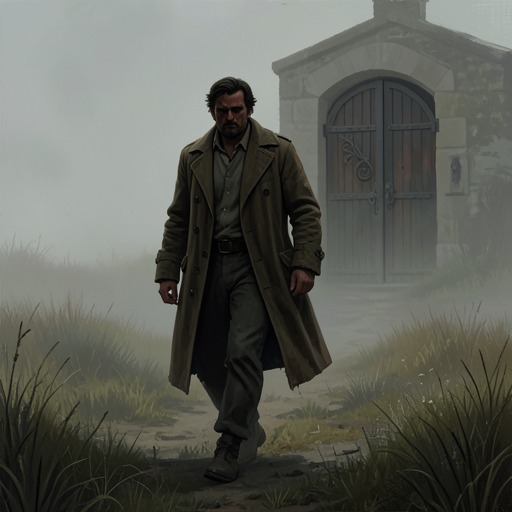
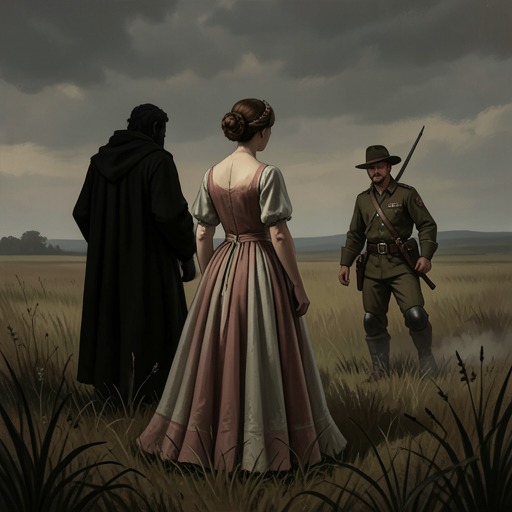
Far from the Madding CrowdWeatherbury is the rural parish and village at the center of the novel’s agricultural and communal life. It is more than a setting: its farms organize labor and ownership, its lanes connect private lives to village knowledge, and its seasonal work gives personal conflicts a material context. The place’s apparent continuity holds together a story of changing fortunes, from Gabriel Oak’s return as a shepherd to Bathsheba Everdene’s assumption of the farm and her later withdrawal from public life.
Setting and Character
Weatherbury is also called Lower Longpuddle, and its parish includes the farms and village spaces through which much of the action unfolds. Its rural character is conveyed not as timeless scenery but as a distinct experience of time: what a city dweller regards as ancient history belongs to Weatherbury’s present, while generations of local custom leave everyday speech and clothing little changed. The narrator’s comparison of rural and urban time makes the village’s persistence part of the story’s structure. Events that transform individual lives take place within a community whose habits and forms of work seem to endure.
The village’s landscape is also an economic landscape. Farms, fields, stockyards, barns, cottages, and lanes connect the inhabitants to seasonal labor and its risks. Weatherbury’s agricultural life provides both livelihood and exposure: weather can threaten valuable grain, sheep require continual attention, and a farm’s daily business depends on the skill and coordination of workers. The place therefore gives the novel’s relationships a practical setting, where attachment and conflict unfold alongside the demands of managing land and animals.
Work, Farms, and Local Authority
The sheep-shearing in the Weatherbury Great Barn displays the scale and organization of communal farm work. Hurdles divide the building into enclosures for the sheep, and a catching pen keeps animals ready for the shearers. Women gather fleeces and twist wool into ties; men shear, handle the sheep, and assist with other tasks. Bathsheba watches for careless cutting and checks that the animals are shorn close, while Gabriel Oak moves among the workers, helping with the animals and passing around bread, cheese, and drink. Farm authority here is visible in practical oversight, not merely in ownership: the work depends on knowledge, attention, and a coordinated division of tasks.
That order is tested by the weather. During a threatening storm, Gabriel calculates that the five wheat ricks and three barley stacks represent about seven hundred and fifty pounds’ worth of grain. He covers what he can with waterproof cloths, then improvises protection for the uncovered stacks as the wind rises and rain begins. The episode makes Weatherbury’s harvest a matter of both wealth and subsistence, and it shows how the farm’s fortunes depend on labor performed under pressure. The landscape is not a passive backdrop; changing conditions determine what must be done, how quickly it must be done, and what may be lost.
Bathsheba’s authority as a farmer is publicly established in the old hall when she dismisses her bailiff for theft and announces that she will manage the farm herself, without another bailiff. She tells the workers that they now have a mistress rather than a master, acknowledges that she is still learning her abilities in farming, and promises to serve them fairly if they serve her well. Her declaration that she will be up and in the fields before the men gives this change a concrete daily measure. Weatherbury’s farm community thus becomes the setting in which a woman’s independent management is both announced and put to the test.
Community, Movement, and Recognition
Weatherbury’s lanes bring together people whose lives might otherwise remain separate. Gabriel, destitute and newly arrived near the village, earns money by playing his flute at a fair and learns that a second fair is to be held near Weatherbury. The name matters to him because Bathsheba has gone there. Later, after he reaches the village, he encounters a young woman who asks him to keep her presence secret. He agrees, and the moment briefly places him between the community’s ordinary traffic and another person’s private distress. The village is a destination for Gabriel, but it is also a place where unexpected meetings make private circumstances legible to others.
The same public setting enables a more formal kind of recognition. When a letter addressed to the new shepherd at Weatherbury Farm arrives, Boldwood initially mistakes it for his own, then realizes it is meant for Bathsheba’s shepherd, Gabriel. The address locates the farm in relation to Casterbridge while also identifying the new position Gabriel occupies. Weatherbury’s work and local hierarchy are communicated through such practical details: who is employed on which farm, who receives a letter, and who has the authority to act on it.
Community life can also turn an incident into shared knowledge. After a horse disappears from a paddock at night, Maryann raises the alarm at the nearest house, and Jan Coggan calls Gabriel. They listen for the horse and identify it by the sound of its gait. The episode shows how quickly Weatherbury’s residents can mobilize around a farm loss and how local familiarity supplies a kind of evidence: knowing an animal’s movements and sounds is part of knowing the place. The village’s close social ties are therefore practical as well as intimate.
Change, Absence, and Return
Weatherbury’s role changes with the fortunes of the people who live there, but the village remains the point to which journeys and absences are measured. When Bathsheba and Liddy return from Bath, Gabriel hears their voices as their gig passes near Coggan’s garden gate. He is relieved to know that Bathsheba is back safe, although she and Liddy continue on without stopping. The scene makes the lane a threshold between private travel and community life: a return can be recognized before it becomes a reunion.
Other departures leave a more lasting mark. After Troy’s death, Bathsheba spends much of her time alone, stays in the house or garden, and avoids even Liddy. As summer advances, she begins looking into farm matters out of necessity, though she no longer rides out or personally supervises the work as she once did. On an August evening she enters the village for the first time since the preceding Christmas. Her reappearance gives Weatherbury a measure of her changed condition: she has resumed some contact with the public world, but the narrative emphasizes her withdrawal and altered habits rather than a simple restoration of her former life.
Narrative Significance
Weatherbury’s lasting significance lies in the tension between communal continuity and individual change. Its seasonal routines recur—lambing, shearing, haymaking, and the protection of the harvest—while the people who perform and oversee them undergo reversals of fortune. Work supplies more than local color: it creates obligations, tests competence, and makes the consequences of weather or absence immediately material. At the same time, the village’s lanes, farms, and gathering places bring private lives into view, allowing news, labor, and recognition to pass between neighbors.
The result is a setting that resists being reduced either to an idyllic countryside or to a mere stage for romance. Weatherbury’s rhythms persist, but they do not protect its inhabitants from loss, uncertainty, or change. Its routines provide the novel with a continuing measure of time and responsibility: even when a person retreats from the village, the work of the farm and the life of the community continue around that absence.